Portland CT homeowners often overlook the crawl space when planning energy upgrades, yet this area plays a critical role in your home’s comfort and efficiency. Poor crawl space insulation allows cold air to seep through floors in winter, drives up heating costs, and creates the perfect environment for moisture problems that can damage your home’s structure. This guide explains which insulation materials work best for crawl spaces in Connecticut’s climate and what you need to know before starting your project.
Why Crawl Space Insulation Matters in Portland CT
Connecticut’s climate swings from humid summers to freezing winters create demanding conditions for crawl spaces. Without proper insulation, you’ll feel cold floors all winter, experience higher energy bills year-round, and risk moisture-related damage to floor joists and subflooring.
Uninsulated crawl spaces in Portland, CT homes lose significant heat through the floor during winter months. The Department of Energy estimates that proper crawl space insulation can reduce heating and cooling costs by 15 to 20 percent. Beyond energy savings, effective insulation creates a barrier against moisture intrusion, one of the biggest threats to homes in our region.
Moisture problems in crawl spaces lead to mold growth, wood rot, pest infestations, and poor indoor air quality throughout your home. The stack effect pulls air from your crawl space up through your living areas, meaning whatever is in that space affects the air you breathe daily.
Types of Crawl Space Insulation
Three main insulation types work well for Connecticut crawl spaces, each with distinct advantages depending on your specific situation.
Closed-Cell Spray Foam Insulation
Closed-cell spray foam delivers the highest R-value per inch (about R-6.5 to R-7) and acts as both insulation and vapor barrier. Professional insulation contractors spray it directly onto foundation walls and rim joists, where it expands and hardens into a waterproof seal.
This material excels in crawl spaces because it prevents air leakage and moisture penetration simultaneously. At two inches thick, closed-cell spray foam provides R-13 to R-14 and meets building code requirements for most applications. It costs more upfront than other options but delivers superior performance in damp, challenging spaces.
Spray foam adheres to concrete, wood, and metal surfaces, sealing gaps and cracks that other insulation types cannot address. It does not absorb water, will not support mold growth, and maintains its R-value over decades.
Rigid Foam Board Insulation
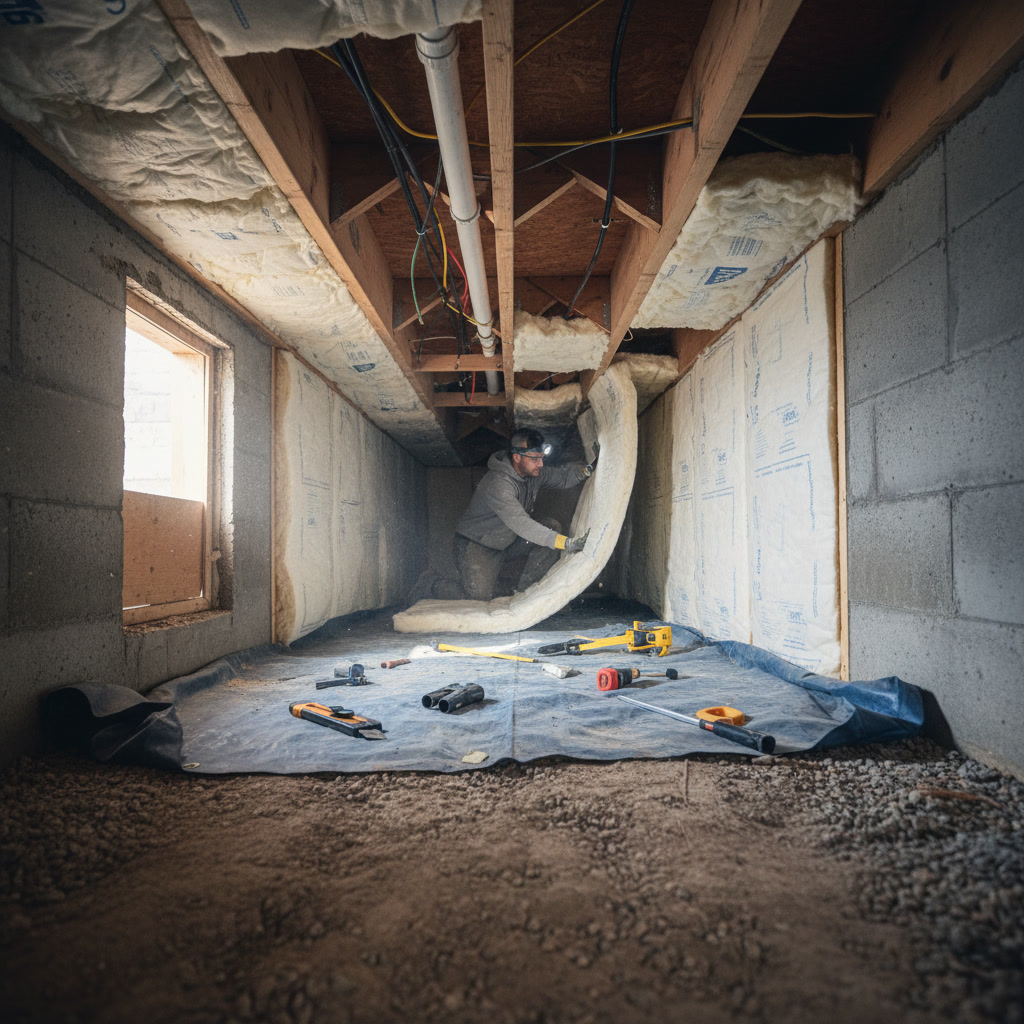
Rigid foam boards made from extruded polystyrene (XPS) or polyisocyanurate offer R-5 per inch and resist moisture effectively. Contractors install these boards against foundation walls using adhesive or mechanical fasteners, then seal the seams with tape or caulk.
Two-inch rigid foam provides R-10, suitable for most Connecticut crawl spaces. The boards come in standard 4×8-foot sheets, making installation straightforward for professionals. When properly sealed, rigid foam creates an effective vapor barrier that protects foundation walls from condensation.
This option costs less than spray foam while still delivering good thermal performance and moisture control. However, it requires careful attention to sealing all joints and edges to prevent air leakage around the boards.
Fiberglass Batt Insulation
Fiberglass batts installed between floor joists represent the traditional approach to crawl space insulation. Standard R-19 batts (six inches thick) fit most residential floor joist cavities and provide adequate thermal resistance when properly installed.
This method costs less than wall insulation approaches but comes with significant drawbacks in crawl spaces. Fiberglass absorbs moisture, sags over time, and loses most of its insulating value when wet. It also does nothing to prevent air movement through the crawl space or protect foundation walls from condensation.
If you choose fiberglass batts, they must be covered with a vapor barrier on the warm side (facing up toward living space) and the crawl space must remain well-ventilated. Most building science experts now recommend insulating crawl space walls instead of the floor above because wall insulation better controls moisture and air movement.
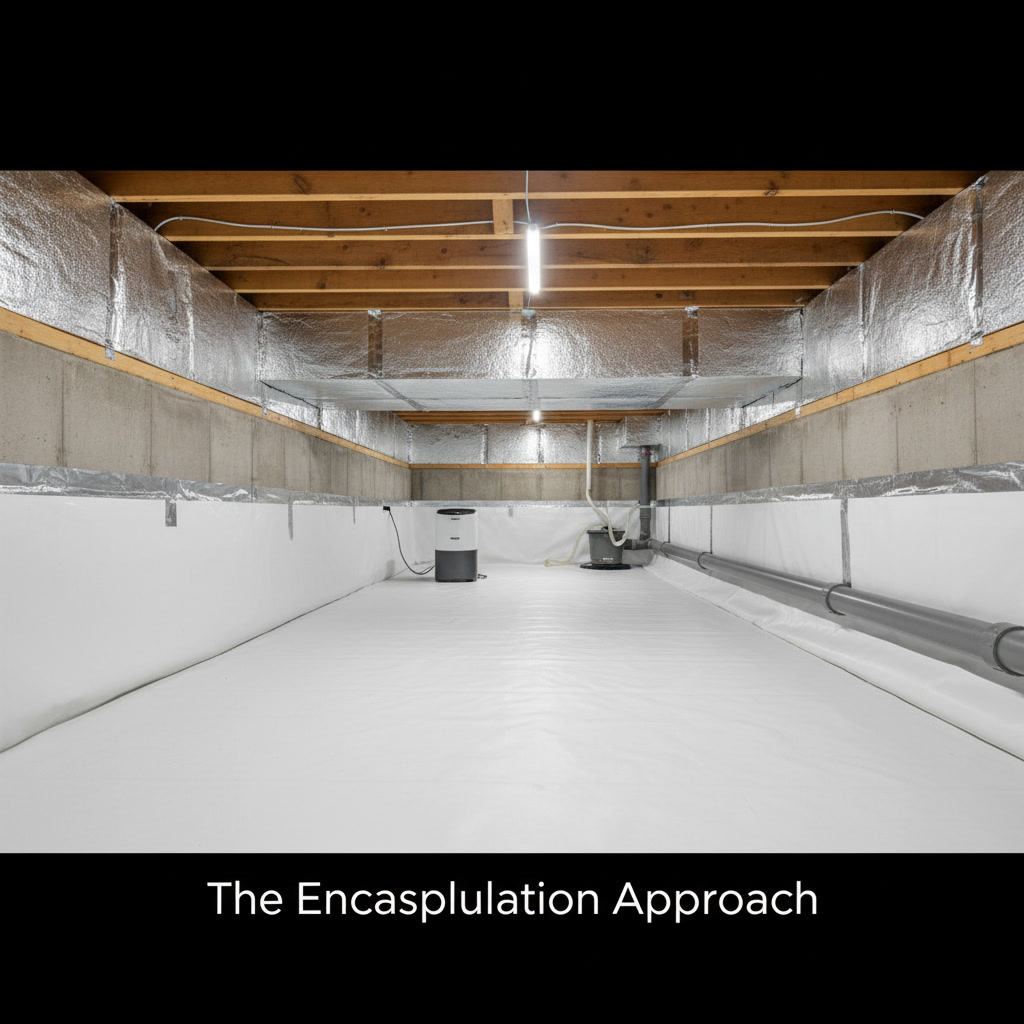
The Encapsulation Approach
Modern best practice for crawl spaces involves full encapsulation, treating the space as part of your home’s conditioned envelope rather than as outdoor space beneath your house. This approach transforms crawl space insulation from a simple project into a comprehensive moisture control system.
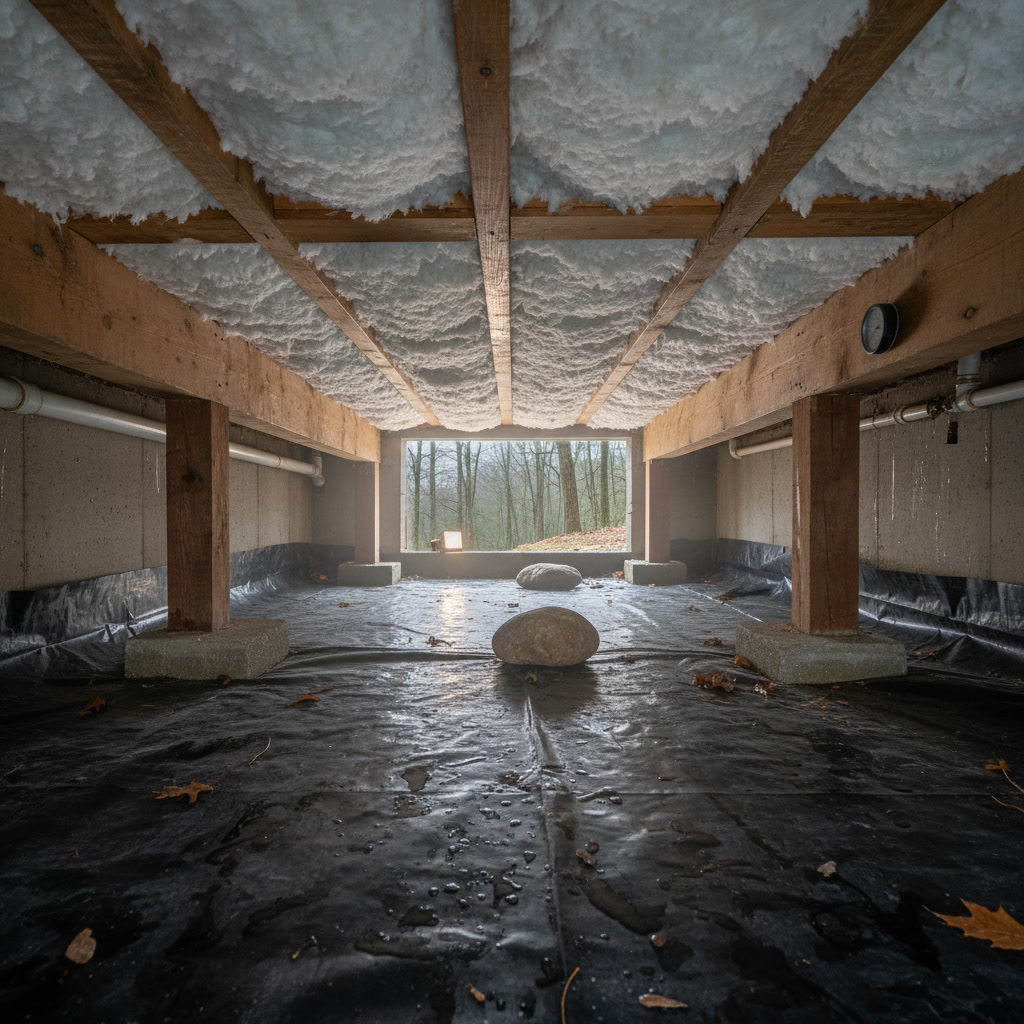
Encapsulation includes sealing all vents, insulating foundation walls instead of floor joists, covering the ground with a heavy-duty vapor barrier, and conditioning the space with conditioned air from your HVAC system or a dedicated dehumidifier.
Portland homeowners who encapsulate their crawl spaces report warmer floors in winter, lower energy bills, elimination of musty odors, and improved overall comfort. The system prevents ground moisture from entering the space, eliminates drafts, and creates a dry environment where mold and pests cannot thrive.
Pro Tip: Before insulating any crawl space, address existing moisture problems, repair foundation cracks, improve drainage around your home’s perimeter, and fix any plumbing leaks. Insulation traps whatever conditions exist, so you want a dry space before you seal it up.
Installation Considerations for Portland Homes
Professional installation matters significantly for crawl space insulation because mistakes create long-term problems that worsen over time.
Moisture Testing and Preparation
Before any insulation goes in, contractors should test moisture levels in your crawl space using specialized meters. Readings above 17 percent in wood members indicate active moisture problems that require correction before insulation.
Preparation work includes removing debris, old damaged insulation, and addressing any standing water or obvious moisture sources. Grading around your home should slope away from the foundation at least six inches over ten feet to direct rainwater away from crawl space walls.
Vapor Barrier Installation
A proper ground vapor barrier uses six-mil polyethylene sheeting at minimum, though 10-mil or 12-mil reinforced barriers last longer and resist tears better. The barrier should cover 100 percent of the crawl space floor, extend six inches up foundation walls, and overlap at seams by at least 12 inches with all seams taped.
Contractors secure the barrier to walls using termination bars or adhesive. Any penetrations for posts or pipes must be carefully sealed to maintain the barrier’s effectiveness.
Insulation Placement
When insulating crawl space walls, coverage should extend from the sill plate down the foundation wall to the ground level. Many codes require insulation to continue horizontally along the ground for two to four feet to prevent frost from penetrating beneath the foundation.
Rim joists require special attention because they represent major sources of air leakage in most homes. Spray foam works exceptionally well here, sealing gaps between framing members while providing insulation. Understanding Connecticut insulation costs helps you budget appropriately for professional installation.
R-Value Requirements for Connecticut
Connecticut building code requires minimum R-15 insulation for crawl space walls in new construction, though R-19 or higher delivers better performance and energy savings. For floor insulation (when you insulate between joists instead of walls), code requires R-30.
These represent minimums. Higher R-values make economic sense in our climate because they pay back the additional investment through lower energy bills within a few years. Many energy efficiency programs recommend R-20 to R-25 for crawl space walls in Connecticut.
The right R-value for your home depends on your heating system, energy costs, and how long you plan to stay in the house. Higher insulation levels make the most sense for homes with expensive heating fuels like oil or propane.
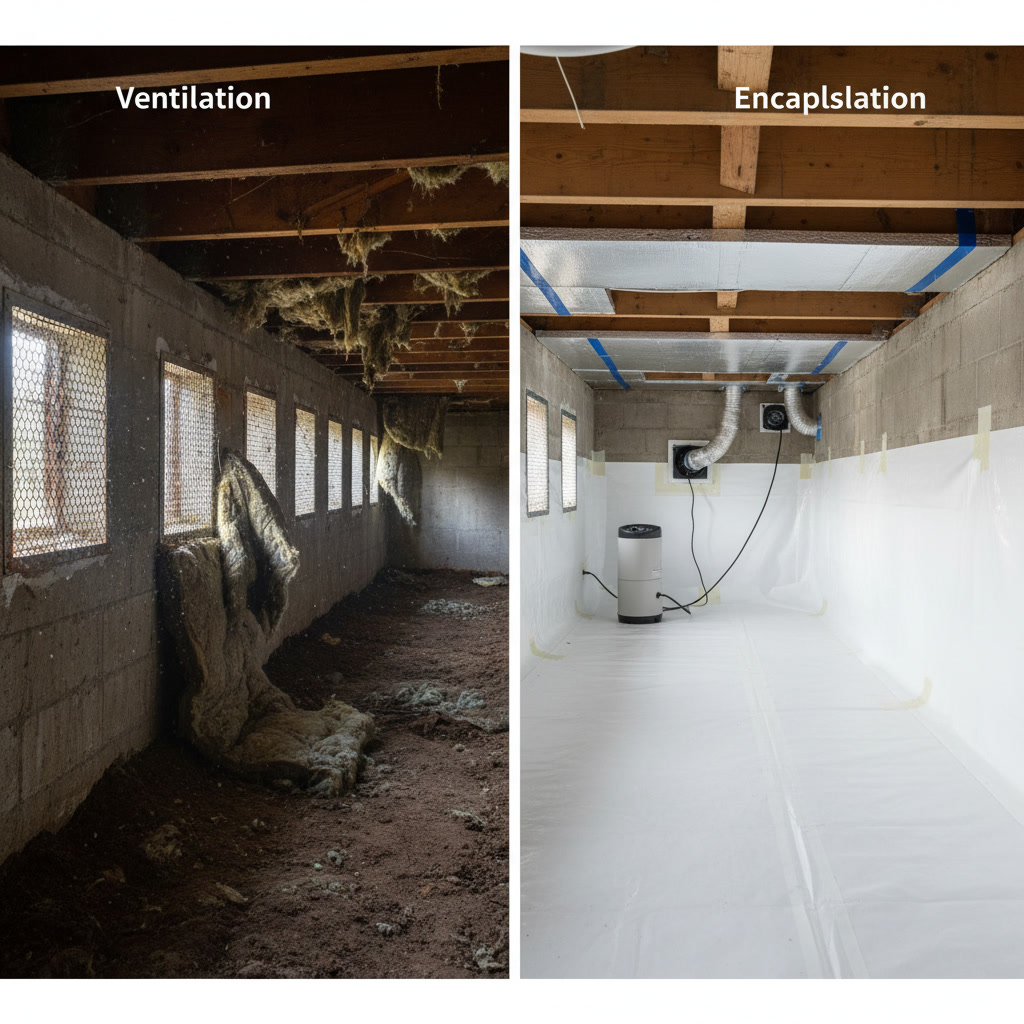
Ventilation Versus Encapsulation
Traditional building practice called for ventilating crawl spaces with outside air through foundation vents. The theory suggested that ventilation would dry out moisture, but research over the past 20 years proved this approach often makes moisture problems worse.
In humid climates like Connecticut, outdoor air carries moisture into the crawl space during summer. When that warm, humid air contacts cool foundation walls and floor joists, it condenses, creating the exact moisture problems ventilation was supposed to prevent.
Modern building science overwhelmingly supports sealed, conditioned crawl spaces for our region. Closing foundation vents, insulating walls, installing a ground vapor barrier, and conditioning the space produces better results in terms of moisture control, energy efficiency, and indoor air quality.
Homeowners in Glastonbury, CT and surrounding areas who have made this transition report dramatic improvements in basement humidity levels and overall home comfort.
Key Takeaway: Sealing crawl space vents and conditioning the space works better than ventilation in Connecticut’s climate. This approach keeps crawl spaces drier year-round and reduces energy consumption.
Common Crawl Space Insulation Mistakes
Several common errors undermine crawl space insulation performance and waste homeowners’ money.
Insulating Before Fixing Moisture Problems
Adding insulation to a crawl space with active leaks, poor drainage, or plumbing problems traps moisture and accelerates damage. Always correct moisture sources first, then insulate a dry space.
Improper Vapor Barrier Installation
Gaps, tears, or incomplete coverage in ground vapor barriers allow ground moisture to enter the space. The barrier must cover every square inch of exposed soil and connect properly to foundation walls to work effectively.
Leaving Vents Open in Insulated Spaces
When you insulate crawl space walls and install a ground vapor barrier, foundation vents must be sealed permanently. Open vents introduce humid outdoor air that condenses on cool surfaces, creating mold and reducing insulation effectiveness.
Insufficient Insulation Thickness
Using one inch of spray foam or R-11 batts saves money upfront but delivers poor performance. Meeting or exceeding code minimums (R-15 for walls, R-30 for floors) provides the thermal protection Connecticut homes need.
Ignoring Air Sealing
Insulation slows heat transfer, but air leaks move heat rapidly and carry moisture. Proper crawl space work includes sealing all gaps, cracks, and penetrations in addition to installing insulation. Homes needing comprehensive improvements often benefit from coordinating window insulation and door insulation projects to maximize whole-house performance.
Cost Considerations
Crawl space insulation costs in Connecticut vary based on space size, access difficulty, insulation type, and whether you encapsulate the entire space or just add insulation.
Spray foam insulation typically costs $1.50 to $3.00 per square foot for a two-inch application. A 1,000-square-foot crawl space would run $1,500 to $3,000 for wall insulation alone. Full encapsulation including vapor barrier, insulation, vent sealing, and conditioning equipment ranges from $3,000 to $8,000 for typical homes.
Rigid foam boards cost less at $0.75 to $1.50 per square foot installed. Fiberglass batts represent the least expensive option at $0.50 to $1.00 per square foot, though their performance limitations make them less cost-effective over time.
These investments pay back through lower energy bills, typically recovering costs within five to ten years depending on your heating system and energy prices. Federal tax credits and utility rebate programs sometimes offset 10 to 30 percent of project costs for qualifying improvements.
When comparing options, consider total performance rather than just upfront cost. Spray foam’s superior moisture control and air sealing often justifies the higher price, especially in problematic crawl spaces with chronic moisture issues.
When to Replace Existing Insulation
Existing crawl space insulation should be replaced when it shows signs of moisture damage, pest infestation, or significant deterioration. Fiberglass batts that sag, appear water-stained, or smell musty no longer insulate effectively and may contribute to indoor air quality problems.
Signs your crawl space needs new insulation include cold floors in winter, ice dams on your roof, musty odors in your home, visible mold growth, increasing energy bills, or sagging, damaged insulation visible during inspection.
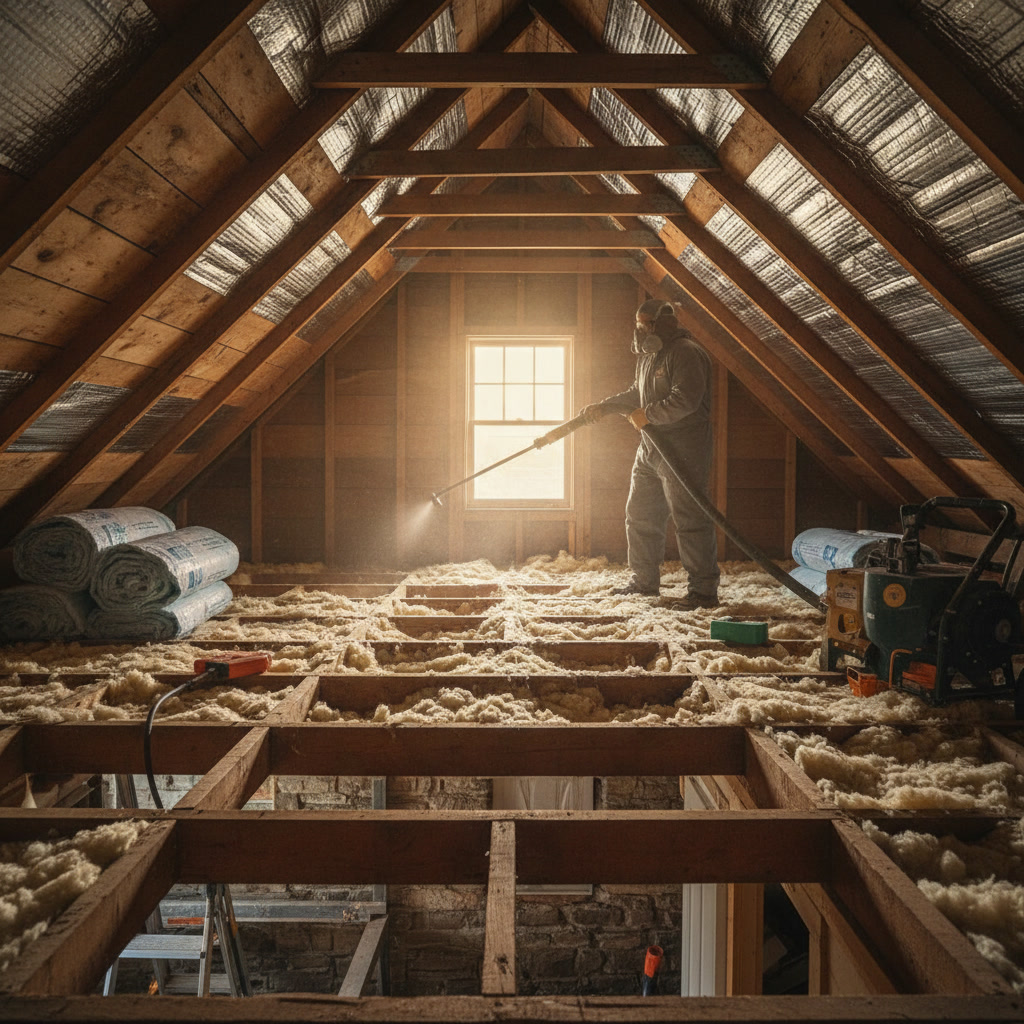
Most fiberglass insulation in crawl spaces degrades within 10 to 15 years due to moisture exposure and gravity. Spray foam and rigid foam last much longer, typically maintaining performance for 50 years or more when properly installed. Similar principles apply when you need to replace old attic insulation.
Additional Home Improvements to Consider
Crawl space insulation works best as part of a comprehensive approach to home performance. Other improvements amplify your insulation investment and maximize comfort and savings.
Air sealing your home’s envelope reduces the amount of conditioned air that escapes, making your heating and cooling systems more efficient. Weather-stripping doors and windows costs little but prevents significant air leakage.
Improving attic insulation complements crawl space work because heat naturally moves toward the coldest areas of your home. A well-insulated envelope from foundation to roof delivers the best results.
If your crawl space has dirt floors, consider pairing insulation with moisture-resistant flooring options for any finished areas. Moisture-resistant basement flooring prevents the same humidity problems that plague uninsulated crawl spaces.
Frequently Asked Questions
What is the best type of crawl space insulation for Connecticut homes?
Closed-cell spray foam insulation performs best in Connecticut crawl spaces because it provides high R-value, acts as a vapor barrier, seals air leaks, and resists moisture damage. For budget-conscious projects, rigid foam boards properly sealed at seams offer good performance at lower cost.
Should I insulate crawl space walls or the floor above?
Insulating crawl space walls works better than floor insulation in most cases. Wall insulation treats the crawl space as part of your conditioned home, controls moisture more effectively, and simplifies HVAC considerations. Floor insulation makes sense only when you maintain a vented crawl space, which building science research no longer recommends for humid climates like Connecticut.
How much does crawl space insulation cost in Portland CT?
Professional crawl space insulation in Portland typically costs $1,500 to $3,000 for spray foam or rigid board wall insulation in an average-sized home. Full encapsulation including vapor barrier, insulation, vent sealing, and conditioning equipment ranges from $3,000 to $8,000 depending on space size and site conditions.
Do I need a vapor barrier with crawl space insulation?
Yes, every crawl space needs a ground vapor barrier covering 100 percent of exposed soil to prevent ground moisture from entering the space. When using closed-cell spray foam, the foam itself acts as a vapor barrier on walls. Rigid foam and fiberglass require separate vapor barrier installation.
Can I insulate my crawl space myself?
While homeowners can install rigid foam boards or fiberglass batts, professional installation ensures proper moisture control, complete air sealing, and compliance with building codes. Spray foam requires specialized equipment and training. Most homeowners benefit from hiring experienced contractors who understand building science principles and local moisture conditions.
Protect Your Home with Professional Crawl Space Insulation
Proper crawl space insulation transforms your home’s comfort, reduces energy waste, and protects your investment from moisture damage. The right materials and installation methods for Portland CT’s climate make the difference between an improvement that performs for decades and one that fails within a few years.
Top Notch Home Solution LLC brings 19 years of experience to crawl space insulation projects throughout Portland and surrounding Connecticut communities. Our family-owned business understands local climate challenges and building practices that deliver lasting results. For a free estimate on crawl space insulation or to discuss which approach works best for your home, call +18607068116 to speak with our team today.