Your attic feels like a sauna in summer and an icebox in winter. Your energy bills keep climbing despite no change in usage. These frustrations often trace back to one culprit: deteriorating attic insulation that no longer does its job. Knowing when to replace old insulation can save you hundreds of dollars annually and restore comfort to your home.
This guide walks you through the warning signs of failing insulation, the typical lifespan of different materials, and what homeowners in Glastonbury should know before tackling this essential upgrade.
How Long Does Attic Insulation Actually Last
Insulation doesn’t last forever, despite what many homeowners assume. Different materials deteriorate at different rates depending on environmental factors, installation quality, and exposure to moisture or pests.
Fiberglass batts typically last 15 to 20 years before they begin losing effectiveness. Cellulose insulation has a similar lifespan of 20 to 30 years under ideal conditions. Spray foam insulation can last 80 years or more when properly installed, though it represents a smaller fraction of existing homes.
However, these timelines assume perfect conditions. Moisture exposure, pest infestations, and compression can cut these lifespans dramatically. A 10-year-old attic with a roof leak might need complete insulation replacement, while a 25-year-old attic in pristine condition might still perform adequately.
Homes built before 1980 in Glastonbury often contain insulation that has far exceeded its useful life. If your home falls into this category and you’ve never upgraded the attic insulation, you’re almost certainly losing money every month.
Clear Signs You Need to Replace Old Insulation
Several visible and measurable indicators tell you when attic insulation has reached the end of its effective life. Recognizing these signs early helps you address the problem before it leads to larger issues like mold growth or structural damage.
Visible Deterioration and Damage
Walk into your attic and look closely at the insulation material itself. Healthy fiberglass batts maintain their fluffy, thick appearance. If yours look flat, compressed, or matted down, they’ve lost the air pockets that provide thermal resistance.
Water stains, dark spots, or a musty odor indicate moisture problems. Wet insulation loses virtually all insulating value and creates an ideal environment for mold. Even after drying, previously wet insulation rarely regains its original R-value.
Pest droppings, nesting materials, or actual rodent activity mean your insulation has become contaminated. Beyond the health hazards, animals compress and displace insulation, creating gaps that allow air infiltration.
Unexplained Energy Bill Increases
Compare your current energy bills to those from three or five years ago, adjusting for rate changes. A gradual upward trend in consumption, especially during extreme weather months, often points to declining insulation performance.
Your heating and cooling systems run longer cycles to maintain the same temperature. This increased runtime shows up clearly on your utility statements and puts extra wear on your HVAC equipment.
Uneven Temperature Distribution
Second-floor rooms feel noticeably hotter in summer or colder in winter than the first floor. This temperature stratification happens when attic insulation fails to create an effective thermal barrier between conditioned space and the extreme temperatures in your attic.
Ice dams forming along your roof edge in winter signal heat escaping through inadequate attic insulation. The warm air melts snow on your roof, which refreezes at the colder eaves, potentially causing water damage.
Insufficient R-Value for Your Climate
Current building codes recommend R-49 to R-60 for attic insulation in Connecticut’s climate zone. Many older homes have R-19 or less. Even if your existing insulation appears intact, it may simply not provide enough thermal resistance by modern standards.
You can measure existing insulation depth with a ruler. Fiberglass should be 12 to 15 inches deep to achieve R-38, while cellulose needs 10 to 13 inches for the same value. Anything substantially less indicates the need for additional material or complete replacement.
What Happens When You Delay Replacement
Postponing necessary insulation replacement creates a cascade of problems that extend well beyond comfort issues. The financial and structural consequences compound over time.
Energy waste becomes the most immediate cost. A typical Glastonbury home with inadequate attic insulation can lose 25% to 40% of its heating and cooling energy through the ceiling. At average Connecticut electricity and natural gas rates, this translates to $500 to $1,200 in unnecessary annual expenses.
HVAC systems work harder and fail sooner when your home can’t maintain temperature efficiently. The average furnace or air conditioner costs $4,000 to $8,000 to replace. Premature failure due to overwork from poor insulation makes this expensive replacement come years earlier than necessary.
Moisture accumulation in failing insulation creates ideal conditions for mold growth. Once mold establishes itself in your attic, remediation costs range from $1,500 to $6,000 or more, depending on the extent of contamination. Health effects from mold exposure add another dimension of concern for families.
Home resale value suffers when inspections reveal outdated or damaged insulation. Savvy buyers either walk away or demand price reductions that far exceed the cost of proactive replacement.
Special Considerations for Glastonbury Homes
Glastonbury’s housing stock includes many homes built between 1950 and 1980, an era when insulation standards were minimal by today’s measures. These properties often have original insulation that has degraded significantly.
The town’s proximity to the Connecticut River creates microclimates with higher humidity levels in certain neighborhoods. This moisture accelerates insulation deterioration and increases the likelihood of mold issues in older materials.
Local building codes and permit requirements apply when you replace old insulation as part of a larger renovation. While insulation replacement alone typically doesn’t require a permit, combining it with electrical work or structural modifications does. Checking with the Glastonbury Building Department before starting work prevents compliance issues.
Connecticut’s Home Energy Solutions program offers rebates and incentives for insulation upgrades that meet specific criteria. These programs can offset 25% to 50% of project costs for qualifying homeowners, making replacement more affordable.
Types of Replacement Insulation to Consider
When the time comes to replace old insulation, you’ll choose from several material options, each with distinct advantages for attic applications.
Fiberglass Batts and Rolls
Fiberglass remains the most common choice due to its balance of cost, performance, and ease of installation. Modern fiberglass products offer R-values of R-3.2 to R-4.3 per inch and resist moisture better than older formulations.
The material works well for standard joist spacing and attics without many obstructions. However, gaps around irregular spaces reduce effectiveness, and installation quality significantly impacts performance.
Blown-In Cellulose
Cellulose insulation fills gaps and irregular spaces more completely than batts, providing R-3.6 to R-3.8 per inch. The material contains fire retardants and resists pests when properly treated.
Blown-in application allows contractors to achieve uniform coverage and precise R-values. Cellulose settles slightly over time, so installers typically add 10% to 15% extra material to account for this compression.
Spray Foam Insulation
Closed-cell spray foam delivers the highest R-value per inch at R-6.0 to R-7.0 and creates an air barrier that stops infiltration completely. The material adheres to roof decking and framing, adding structural rigidity.
Cost runs two to three times higher than fiberglass or cellulose, but the superior performance and longevity often justify the investment. Spray foam particularly suits homes with cathedral ceilings or complex rooflines where traditional insulation proves difficult to install properly.
The Replacement Process
Professional insulation replacement follows a systematic approach that ensures safety, thoroughness, and optimal performance of new materials.
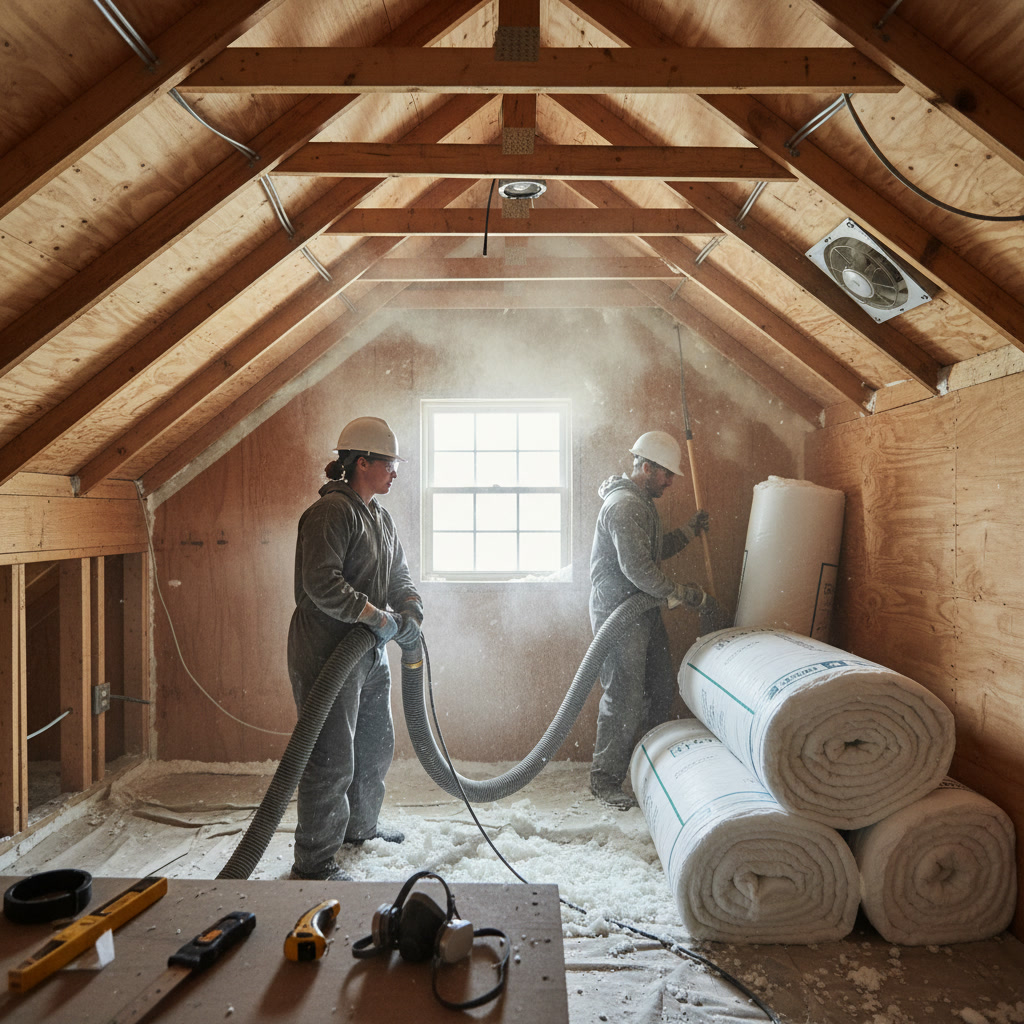
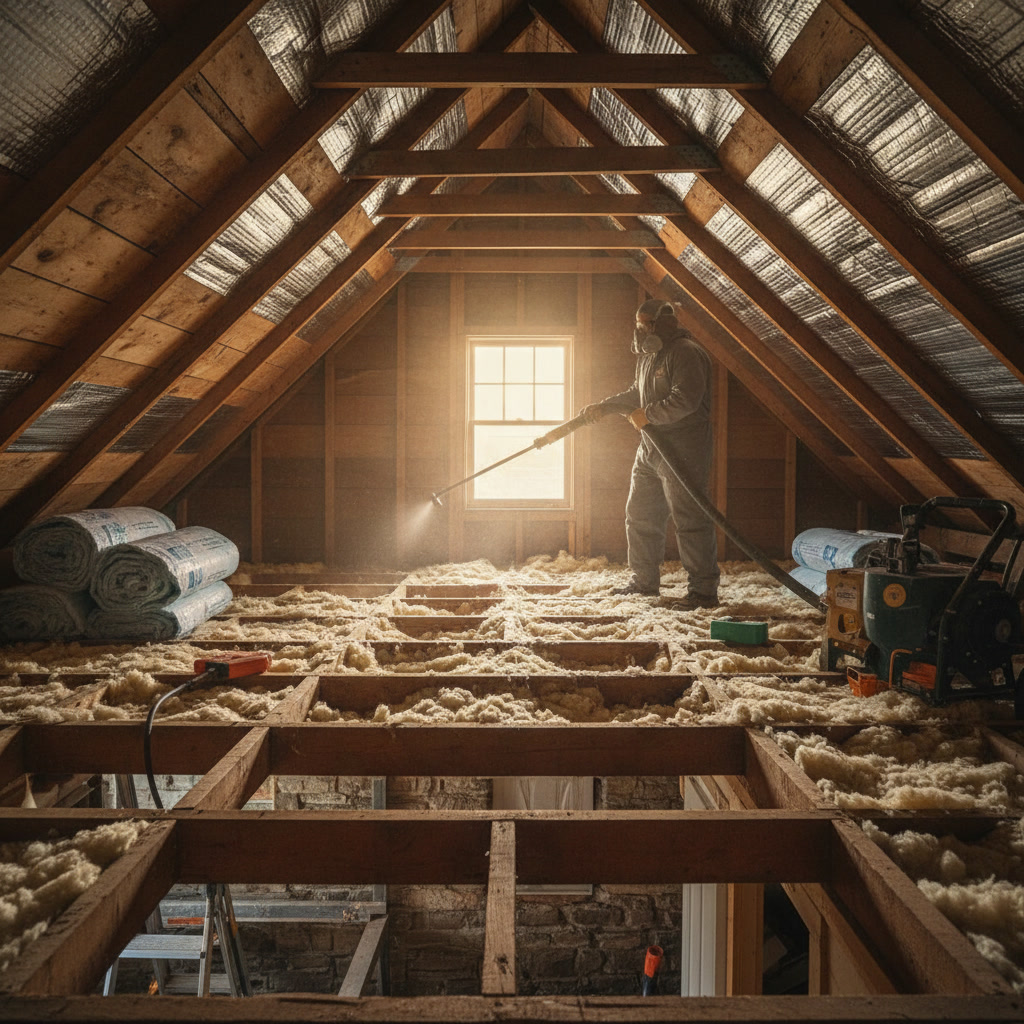
Contractors begin by removing existing insulation completely. This step allows inspection of the roof deck, rafters, and ceiling joists for hidden damage, mold, or structural issues. Attempting to install new insulation over damaged old material traps problems that worsen over time.
Air sealing comes next. Professionals seal penetrations around plumbing stacks, electrical wires, recessed lights, and attic hatches with appropriate materials. These gaps account for significant energy loss that insulation alone cannot address. Proper air sealing can improve overall thermal performance by 15% to 25%.
Ventilation assessment ensures your attic has adequate intake and exhaust airflow. Insulation works optimally when paired with proper ventilation that prevents moisture buildup and excessive heat accumulation. Most building codes require one square foot of ventilation area for every 150 square feet of attic space.
Installation of new insulation follows manufacturer specifications for depth, coverage, and technique. Professional installers avoid compressing material, maintain clearances around heat sources, and ensure uniform distribution.
Final inspection verifies the installation meets the specified R-value and local code requirements. Quality contractors provide documentation of materials used, R-values achieved, and warranty information.
Cost Expectations for Attic Insulation Replacement
Understanding project costs helps you budget appropriately and evaluate contractor quotes accurately. Prices vary based on attic size, insulation type, accessibility, and the extent of preparation work required.
For a typical 1,200 to 1,500 square foot attic in Glastonbury, complete insulation removal and replacement ranges from $2,500 to $5,000 for fiberglass or cellulose. This assumes straightforward access and no major remediation needs.
Spray foam insulation for the same space typically costs $4,500 to $9,000. While more expensive upfront, the energy savings often result in a shorter payback period, especially in older homes with significant air leakage.
Additional costs apply when contractors discover problems during old insulation removal. Mold remediation adds $1,500 to $4,000. Roof repairs to address leaks or damaged decking range from $500 to $3,000 depending on severity. Upgrading inadequate ventilation adds $300 to $1,500.
Most professional contractors include removal and disposal of old insulation in their quotes, but confirm this before signing agreements. DIY removal might seem cost-effective but creates health risks from dust, contaminants, and potential asbestos in homes built before 1980.
Pro Tip: Schedule insulation replacement during spring or fall when attic temperatures are moderate. Summer attic temperatures exceed 130°F, creating dangerous working conditions that can increase labor costs or limit work hours. Winter access issues from snow and ice can also complicate projects.
Choosing a Qualified Insulation Contractor
The quality of installation matters as much as the insulation material itself. Poor installation of premium insulation delivers worse results than professional installation of standard materials.
Look for contractors with specific insulation experience, not general handyman services. Ask how many attic insulation projects they complete annually. A qualified insulation contractor should handle 50 or more installations per year.
Verify licensing and insurance coverage. Connecticut requires home improvement contractors to register with the Department of Consumer Protection. Insurance should include both liability coverage and workers compensation.
Request references from recent projects similar to yours. Contact these homeowners and ask about punctuality, cleanliness, communication, and whether the promised energy savings materialized.
Get detailed written estimates from at least three contractors. Compare not just the bottom-line price but the scope of work, material specifications, R-values, warranty terms, and timeline. The lowest bid often excludes services that other quotes include.
Top Notch Home Solution LLC brings 19 years of experience to insulation projects throughout Glastonbury and surrounding Connecticut communities. Our licensed and insured team provides transparent quotes, professional installation, and standard one-year warranties on all work.
Frequently Asked Questions
How do I know if my attic insulation contains asbestos
Homes built before 1980 may contain asbestos in vermiculite insulation, which appears as small, light-brown or silver-gold pebbles. Never disturb suspected asbestos material yourself. Contact a certified asbestos inspector to test samples before any removal or replacement work begins. Professional abatement is required if testing confirms asbestos presence.
Can I add new insulation over old insulation instead of replacing it
Adding insulation over existing material works only when the old insulation is dry, intact, and not compressed. If you see any moisture damage, pest contamination, or significant compression, complete removal provides better results. Layering new insulation over moldy or damaged material traps problems and reduces overall effectiveness.
Will new attic insulation really lower my energy bills
Properly installed attic insulation meeting current R-value recommendations typically reduces heating and cooling costs by 15% to 30% in homes with previously inadequate insulation. Actual savings depend on your existing insulation condition, home air sealing, HVAC efficiency, and thermostat settings. Most homeowners see payback periods of five to eight years.
How long does attic insulation replacement take
A typical residential attic insulation replacement takes one to three days. Removal of old insulation usually requires four to eight hours. Air sealing, ventilation work, and new insulation installation add another day or two depending on attic size and complexity. Large homes or those requiring mold remediation may extend the timeline to four or five days.
Do I need to leave my home during insulation replacement
You don’t usually need to vacate during attic insulation work, though some homeowners prefer to leave while old insulation is removed due to dust and noise. Professional contractors seal off the work area from living spaces and use HEPA filtration to contain particulates. Spray foam installation creates odors that dissipate within 24 hours, so temporary relocation might be more comfortable for sensitive individuals.
Making the Decision to Replace
Attic insulation deteriorates gradually, making it easy to ignore until problems become severe. If your insulation shows visible damage, your home has significant temperature inconsistencies, or your energy bills continue climbing, the time to replace old insulation has arrived.
The investment pays for itself through lower utility bills, improved comfort, extended HVAC equipment life, and increased home value. Waiting only allows problems to compound and costs to escalate.
Top Notch Home Solution LLC provides professional insulation services throughout Glastonbury, Hartford, Newington, and surrounding Connecticut communities. Our experienced team evaluates your current insulation condition, recommends appropriate solutions, and delivers quality installations backed by our commitment to customer satisfaction. Contact us at +18607068116 for a free estimate and discover how updated attic insulation can transform your home’s efficiency and comfort.