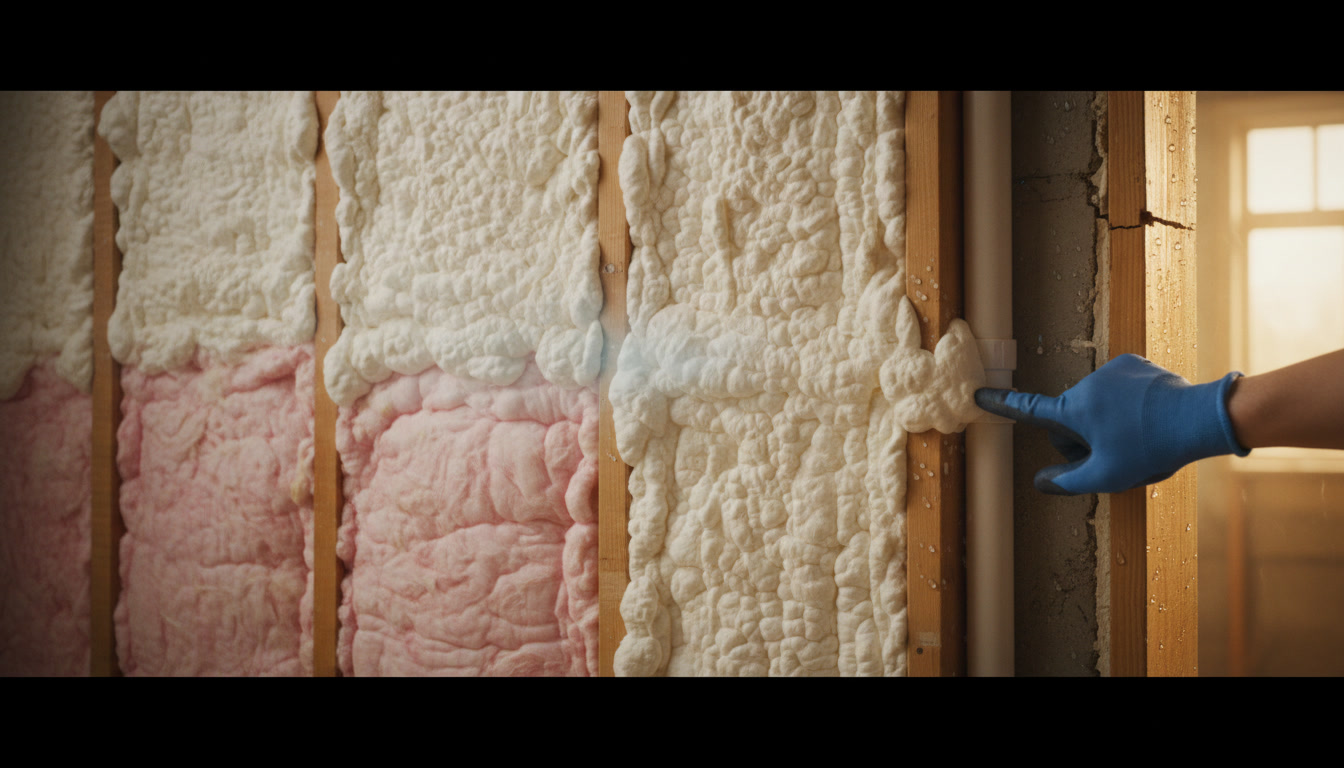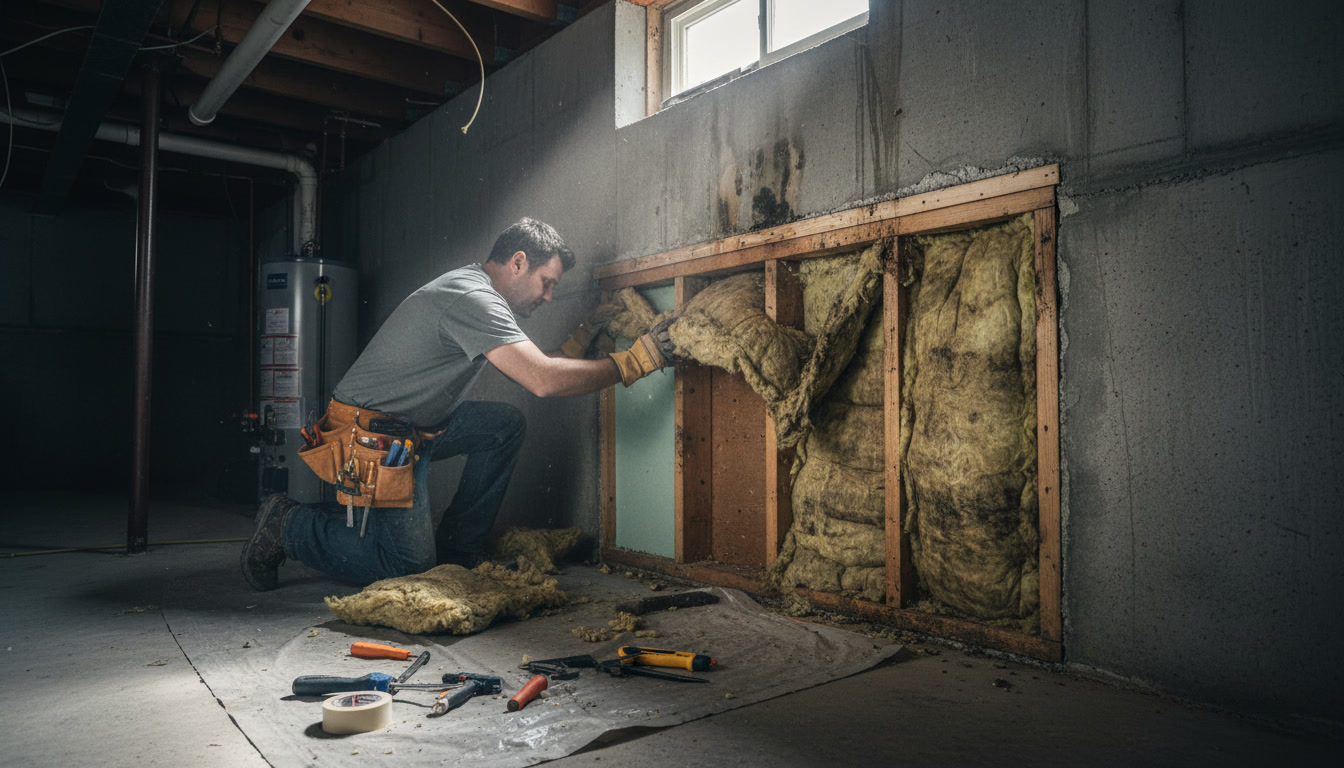
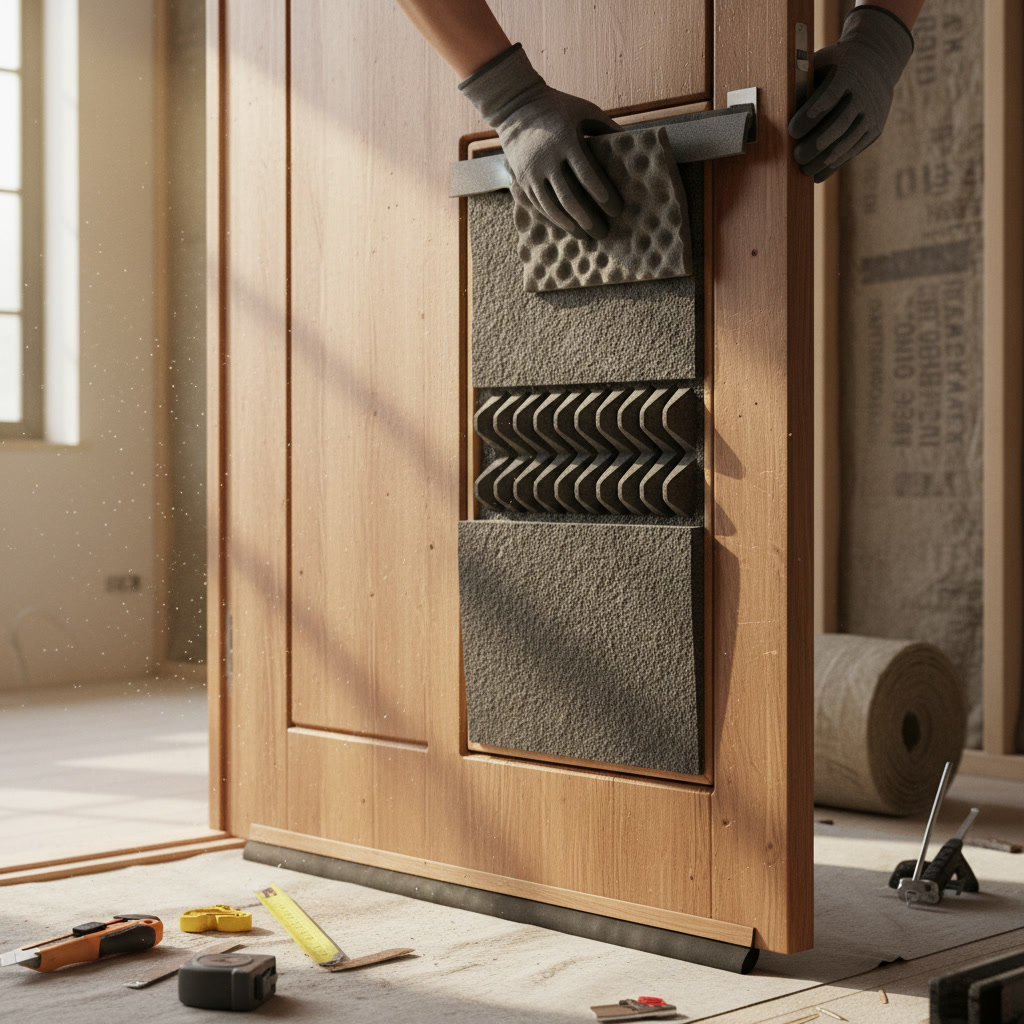
Door insulation reduces noise by creating multiple barriers that absorb, reflect, and dampen sound waves before they enter your living space. The materials used in door insulation noise control, such as weatherstripping, door sweeps, and core insulation, work together to seal gaps and add mass that prevents sound transmission. Homes with properly insulated doors experience noise reductions of 20 to 40 decibels, turning busy street sounds into barely noticeable background hum.
Why Sound Travels Through Doors More Easily Than Walls
Most residential exterior doors are hollow core or have minimal solid material between the interior and exterior surfaces. Sound waves move through air easily, and any gap or thin barrier allows them to pass with little resistance. Even a small crack under a door measuring just one-eighth of an inch can allow as much sound through as if you left a window open several inches.
Standard interior walls typically have R-values between 11 and 15, while an uninsulated hollow door might have an R-value below 2. The difference in density and air gaps creates weak points in your home’s sound barrier. Traffic noise, neighbor conversations, lawn equipment, and other outdoor sounds find the path of least resistance straight through your doors.
The Science Behind How Insulation Blocks Sound Waves
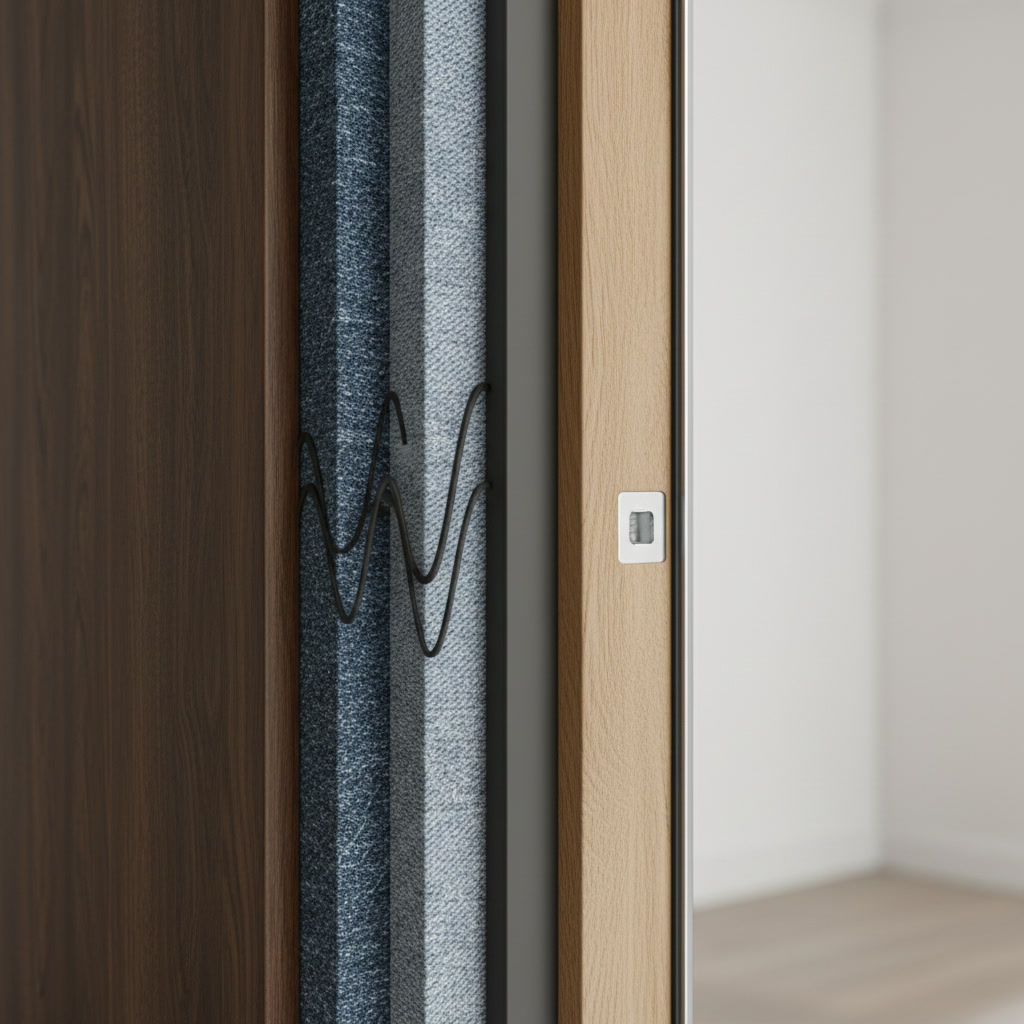
Sound travels as vibrations through air molecules. When those vibrations hit a dense material, three things happen: some energy reflects back, some gets absorbed and converted to tiny amounts of heat, and some passes through. Effective door insulation maximizes the first two outcomes while minimizing the third.
Mass is one of the most important factors in sound blocking. Heavier, denser doors and insulation materials make it harder for sound waves to vibrate the door structure. A solid core door weighing 80 pounds will block significantly more noise than a 30-pound hollow door, simply because the sound energy cannot move the heavier mass as easily.
Air Gaps Are Your Biggest Noise Problem
Even if you install the highest quality solid core door available, gaps around the perimeter and beneath the door will undermine your noise reduction efforts. Sound does not need much space to travel. A gap totaling just one square inch around your door frame can reduce the door’s overall sound blocking ability by up to 50 percent.
Professional door insulation focuses heavily on sealing these gaps with compression weatherstripping and adjustable door sweeps. The goal is to create an airtight seal when the door closes. If air cannot pass through, sound cannot either, since sound requires air molecules to travel.
Materials That Absorb and Dampen Noise in Middletown Homes
Different insulation materials offer different sound absorption qualities. Fiberglass and mineral wool are particularly effective because their fibrous structure traps sound waves and converts the energy to heat through friction. These materials work best when installed inside the door core or in the cavity between the door and frame.
Foam weatherstripping compresses when the door closes, filling gaps and creating a seal that blocks both air and sound. Rubber and vinyl door sweeps at the bottom threshold prevent noise from sneaking under the door. Some homeowners in Connecticut install acoustic door seals, which are specialized gaskets that compress around the entire door perimeter when closed.
How Weatherstripping Works With Door Sweeps to Stop Noise
Weatherstripping attaches to the door frame and compresses against the door face when closed. This compression creates a continuous seal that blocks air, moisture, and sound. Metal-backed foam weatherstripping offers durability, while pure foam or rubber versions provide better compression for irregular gaps.
Door sweeps attach to the bottom of the door and brush against the threshold when closed. The best sweeps have adjustable heights so you can fine-tune the seal as your door or threshold settles over time. Together, weatherstripping and sweeps form a complete perimeter seal. You can learn more about how these components work together to create an effective barrier.
Solid Core vs Hollow Core Doors for Noise Reduction
Hollow core doors contain a honeycomb cardboard or plastic interior with thin veneer faces. They weigh little and cost less but offer minimal noise blocking. Sound waves easily vibrate the thin faces, and the hollow interior provides no absorption material.
Solid core doors use engineered wood, wood composites, or solid wood construction throughout. They weigh substantially more and provide the mass needed to block sound transmission. A solid core door can reduce noise by 30 to 35 decibels, while a hollow core door might only reduce noise by 15 to 20 decibels. For homes near busy roads or in densely populated neighborhoods, the upgrade makes a noticeable difference in indoor quiet.
What Professional Door Insulation Includes
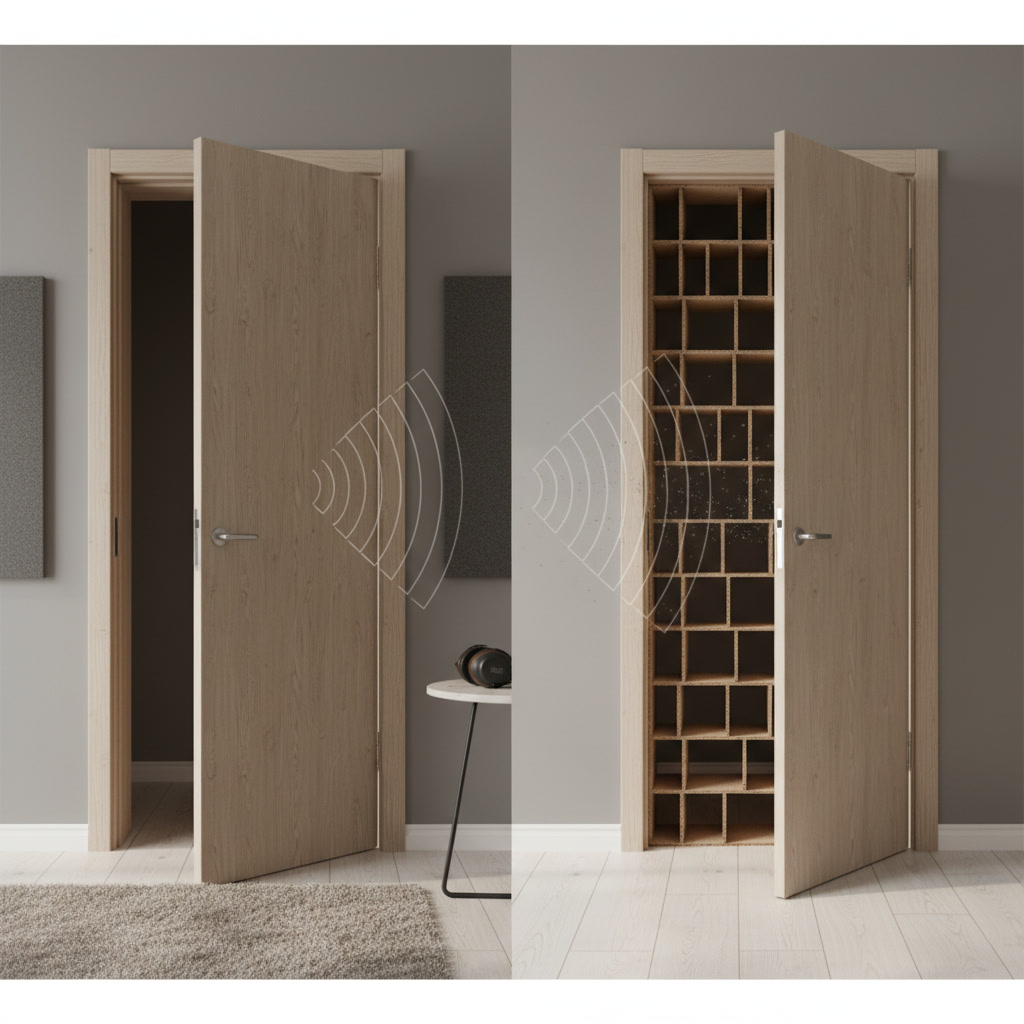
Professional door insulation services assess your current door, frame, and threshold condition before recommending solutions. An experienced contractor examines gaps, checks door alignment, measures clearances, and identifies specific noise entry points. This assessment determines whether you need weatherstripping replacement, door sweep installation, threshold adjustment, or complete door replacement.
The installation process typically includes removing old weatherstripping, cleaning surfaces, measuring and cutting new materials to exact specifications, and installing compression seals around the entire perimeter. Contractors adjust door hinges and strike plates to ensure proper closure and compression. They also install or adjust door sweeps to eliminate the gap at the bottom without creating too much friction that makes the door hard to open.
Some situations require more extensive work. If your door frame has shifted or your threshold has worn down, simple weatherstripping will not solve the problem. Professional services can shim frames, replace thresholds, or recommend door replacement when repair is no longer cost-effective. Similar to other insulation projects, understanding what happens during professional installation helps you know what to expect.
Signs Your Doors Need Better Noise Insulation
You can hear conversations or traffic clearly through closed doors. This indicates insufficient mass in the door itself or gaps that allow sound to pass freely. Light visible around the door perimeter when the door is closed also signals gaps that let sound through.
Drafts around doors are another clear sign. If you feel air movement near your closed door, sound is also passing through those same gaps. Worn weatherstripping that appears compressed, cracked, or detached no longer provides an effective seal. You might also notice that outdoor temperature changes affect rooms near exterior doors more quickly than other rooms, which indicates both air and sound leakage.
Combining Door and Window Insulation for Maximum Quiet
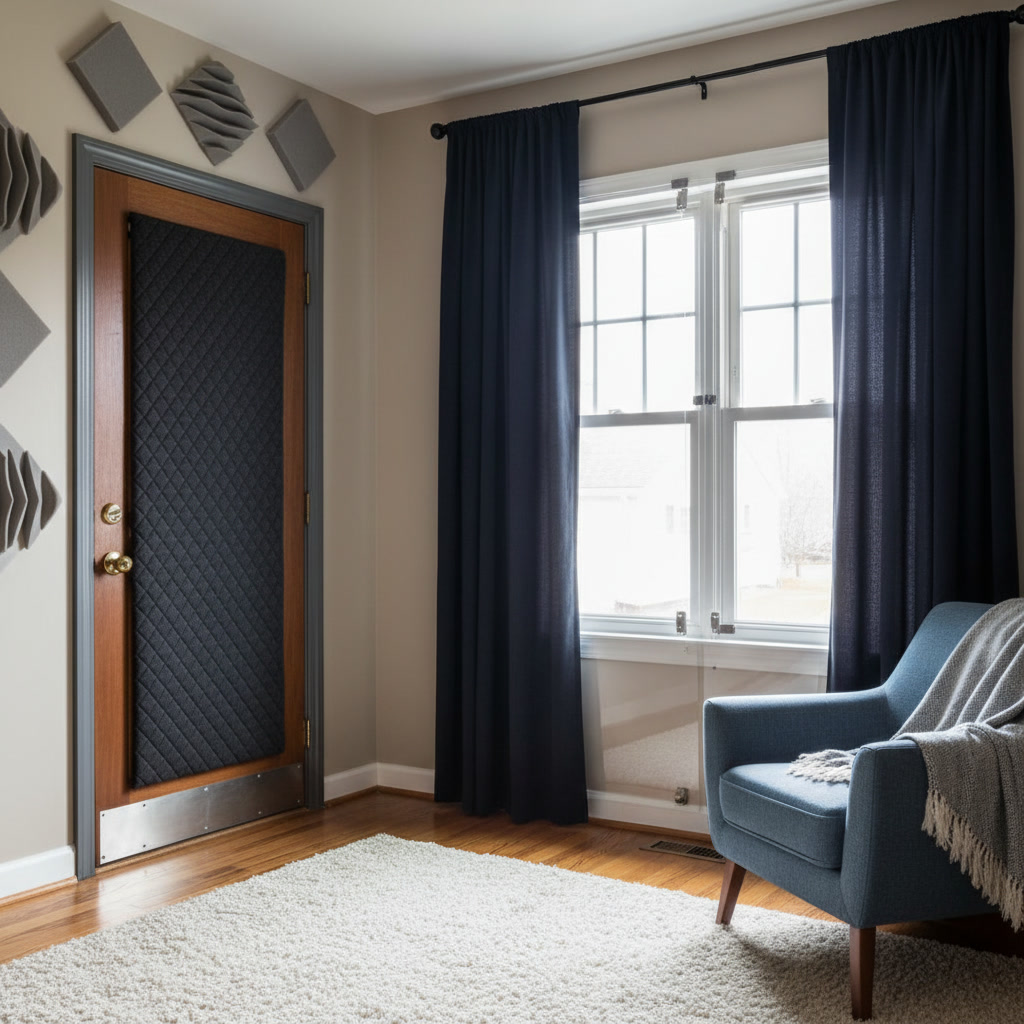
Doors and windows are the two primary weak points in your home’s sound barrier. Addressing only one while ignoring the other limits your overall noise reduction. If you insulate your doors but leave single-pane windows with gaps, street noise will still enter freely through the windows.
Professional window insulation services seal gaps around window frames and can add secondary glazing or film treatments that reduce sound transmission. When combined with door insulation, the cumulative effect creates a noticeably quieter indoor environment. Many homeowners report that addressing both entry points together makes a bigger difference than they expected, particularly in bedrooms and home offices where quiet matters most.
Cost Versus Benefit of Professional Door Insulation
Simple weatherstripping and door sweep installations cost a few hundred dollars per door when done professionally. Solid core door replacement ranges from several hundred to over a thousand dollars per door depending on size, material, and hardware. These investments pay back through improved comfort, better sleep quality, and increased home value.
The energy savings alone often justify the expense. Doors that leak sound also leak conditioned air, forcing your HVAC system to work harder. Homeowners typically see heating and cooling cost reductions of 10 to 20 percent after sealing air leaks around doors. The noise reduction is an added benefit that improves quality of life daily. If you are considering broader insulation improvements, reviewing typical insulation costs in Connecticut can help with budgeting.
Professional Service Delivers Lasting Quiet and Comfort
Proper door insulation requires measuring, fitting, and adjusting multiple components to work together as a complete system. Gaps as small as one-sixteenth of an inch can compromise noise blocking, and achieving consistent compression around an entire door perimeter takes experience. Professional installation ensures materials are selected correctly for your specific door type, climate conditions, and noise challenges.
Top Notch Home Solution LLC has helped Connecticut homeowners reduce unwanted noise through comprehensive door insulation services since 2017. Our approach combines quality materials with careful installation techniques that create lasting seals and measurably quieter homes. Whether you need weatherstripping replacement, door sweep installation, or full door replacement with insulated cores, our team brings 19 years of experience to every project.
If outside noise is disrupting your peace at home, professional door insulation offers a proven solution. Top Notch Home Solution LLC serves homeowners throughout Cromwell and surrounding communities with reliable service backed by our one-year standard warranty. Our family-owned business prioritizes your satisfaction and delivers the quiet, comfortable home environment you deserve. Call us at +18607068116 for a free estimate and discover how much quieter your home can be.