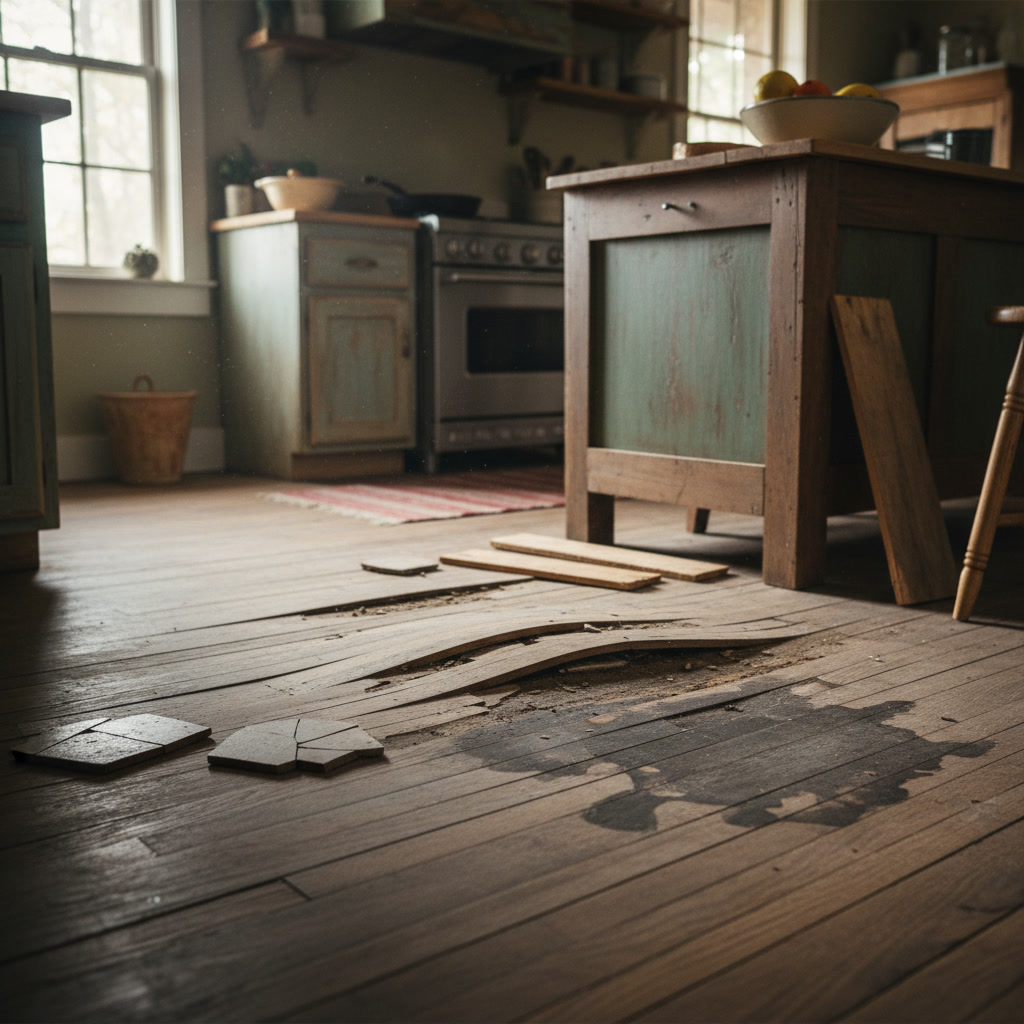
Damaged flooring rarely stays isolated to the surface. The real danger lies beneath, where moisture, wear, and structural stress quietly destroy the subfloor, joists, and framing that support your entire home. Recognizing the signs flooring needs replacement early prevents thousands of dollars in hidden structural repairs and protects your home’s foundation from progressive deterioration.
Why Subfloor Damage Happens When You Wait Too Long
Your subfloor sits directly beneath the visible flooring surface, typically made from plywood or oriented strand board (OSB). When surface flooring fails, it stops protecting this vulnerable layer from moisture, impact, and environmental stress. Water seeps through cracked grout, damaged vinyl seams, and gaps between warped boards. Over time, the subfloor swells, rots, and loses its structural integrity.
Subfloor replacement costs three to five times more than surface flooring alone. Once moisture reaches the subfloor, mold colonies establish themselves within 24 to 48 hours in Connecticut’s humid climate. The damage spreads horizontally across joists and vertically into wall framing, transforming a simple floor replacement into a major renovation project.
The Hidden Cost of Delaying Floor Replacement
Most homeowners postpone floor replacement because the surface damage seems manageable. A few scratches, minor stains, or occasional squeaks feel like cosmetic issues rather than urgent problems. This perception changes dramatically when you discover the subfloor has rotted through or when a contractor quotes $8,000 to replace structural framing instead of $2,500 for straightforward flooring work.
Insurance companies typically exclude gradual damage from coverage. If your flooring slowly deteriorated over months or years, your policy likely won’t cover the subfloor repairs. Sudden incidents like burst pipes qualify for claims, but chronic leaks, wear, and neglect do not. Professional flooring services can assess whether damage qualifies as gradual or sudden.
Soft Spots and Bounce When You Walk
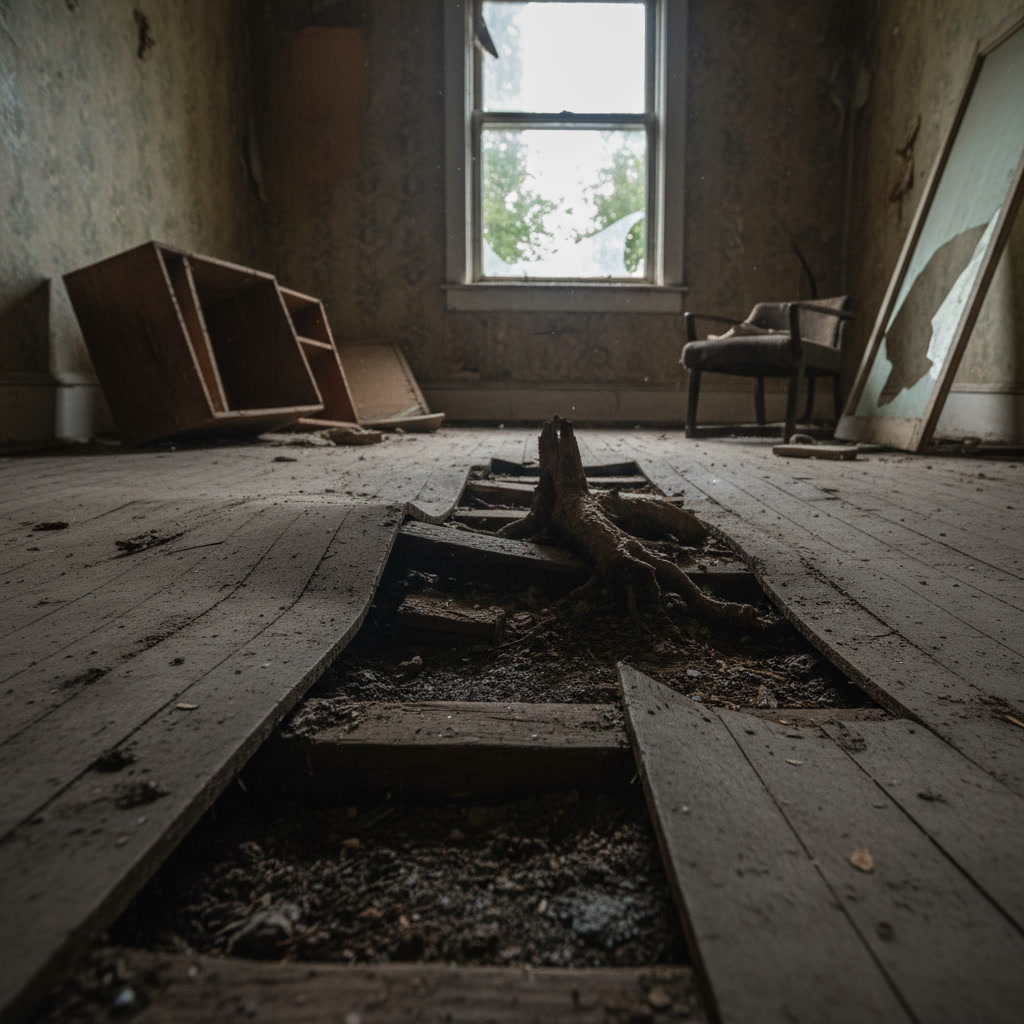
Soft spots represent advanced subfloor damage already in progress. When you step on a section of floor and feel it give slightly, or notice a spongy sensation underfoot, the subfloor has likely absorbed moisture and lost structural rigidity. Healthy subfloors feel solid and unyielding across their entire surface.
The bounce test reveals hidden problems. Walk slowly across each room, paying attention to areas near bathrooms, kitchens, exterior doors, and windows. Any flexing, dipping, or springiness indicates compromised support underneath. This movement stresses floor joists and can crack ceramic tile, separate laminate seams, and accelerate surface wear.
In older Connecticut homes built before 1990, subfloors often use thinner materials (half-inch plywood instead of three-quarter inch). These substrates show soft spots earlier and deteriorate faster once moisture penetrates the surface layer.
Persistent Squeaking and Creaking Sounds
All floors make occasional noise, especially in seasonal temperature swings. Persistent squeaking that occurs in the same spots daily signals separation between the subfloor and joists or between floorboards themselves. This separation allows movement that shouldn’t exist in properly installed, healthy flooring systems.
Squeaks originate from three sources: loose nails pulling away from joists, subfloor delamination where plywood layers separate, or gaps between the subfloor and finished flooring. When multiple areas squeak consistently, the fastening system has failed. Refinishing or patching the surface won’t eliminate the noise because the problem exists in the structural connection below.
Temperature and humidity changes in Middletown homes cause wood to expand and contract. Floors with marginal attachment tolerate these movements for a while, but eventually the repeated stress breaks the mechanical bond between layers.
Visible Water Stains or Discoloration
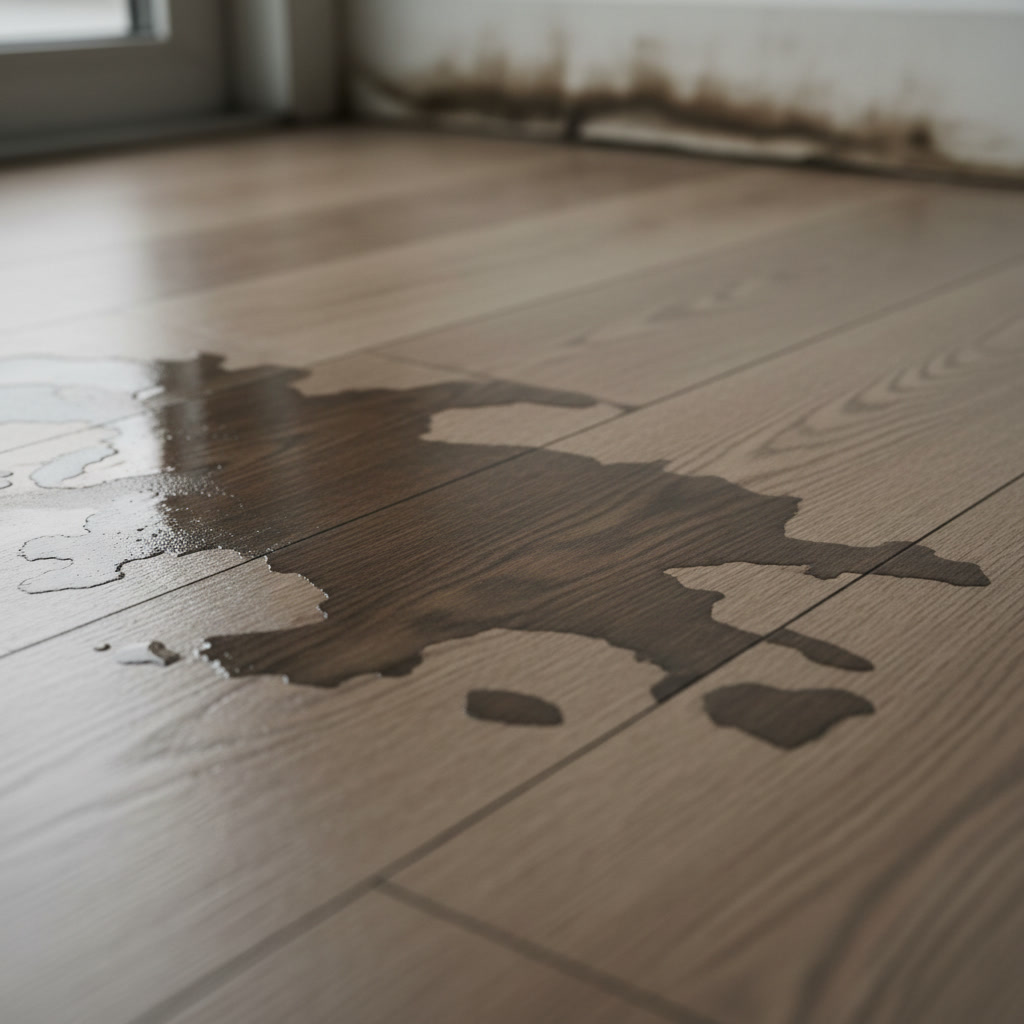
Water stains never appear in isolation. By the time discoloration becomes visible on your floor surface, moisture has already penetrated deep into the material. Dark rings around toilet bases, gray shadows under area rugs, or black spots along baseboards indicate water has traveled through the flooring and into the subfloor.
Surface cleaning cannot reverse water stains in wood, laminate, or vinyl. The discoloration results from chemical changes in the material itself as moisture breaks down finishes, adhesives, and fibers. If you see staining, assume the subfloor underneath has absorbed even more water than the visible surface.
White chalky residue or efflorescence on tile or concrete floors signals moisture moving up from below. This means your moisture problem originates beneath the flooring, possibly from groundwater, poor drainage, or plumbing leaks. Moisture-resistant flooring options help in basement applications, but existing water issues require correction before any replacement begins.
Gaps Between Boards or Tiles
Small seasonal gaps measuring one-sixteenth inch or less are normal in solid hardwood floors. Gaps wider than one-eighth inch, gaps that appear suddenly, or spacing that increases over time indicates structural movement in the subfloor. When the substrate shifts, surface flooring separates at seams and joints.
Tile grout cracks follow the same principle. Hairline cracks in a single grout line might result from normal settling. Multiple cracks radiating from a central point, stepped cracks that follow tile edges, or gaps wide enough to see the subfloor underneath mean the foundation has moved or the subfloor has deteriorated.
Laminate and engineered wood use click-lock systems that rely on stable subflooring. When gaps appear at these mechanical joints, the floor has either been exposed to excessive moisture or the subfloor has warped. The tongue-and-groove connections cannot maintain their grip when the substrate moves more than one-eighth inch in any direction.
Warping, Cupping, or Buckling Surfaces
Cupping occurs when the edges of hardwood boards rise higher than the centers, creating a concave surface. This specific pattern indicates moisture entering from below, through the subfloor. When humidity affects wood from above, you see crowning instead, where board centers rise higher than edges. Cupping always points to substrate moisture problems.
Buckling happens when flooring materials expand beyond their available space and lift entirely away from the subfloor. Vinyl, laminate, and engineered products buckle when exposed to water or when installed without proper expansion gaps. Once buckling occurs, the flooring cannot return to its original position even after drying.
Warped floors create tripping hazards and accelerate wear on the highest points. More importantly, they prevent proper contact between finished flooring and subfloor, eliminating the structural transfer of loads. This separation allows further moisture intrusion and progressive deterioration. When you notice warping patterns across multiple boards or tiles, the subfloor has likely sustained matching damage.
Musty Odors That Won’t Disappear
Persistent musty smells indicate active mold growth somewhere in your flooring system. Surface cleaning, air fresheners, and dehumidifiers mask the odor temporarily but never eliminate it because the source remains hidden in the subfloor cavity or between flooring layers.
Mold requires three conditions: organic material (wood subfloors qualify), moisture above 60% relative humidity, and darkness. The space between your finished floor and subfloor provides all three. Once established, mold colonies release spores continuously, creating both odor and health risks.
Connecticut’s humid summers push indoor humidity above mold-friendly thresholds without adequate climate control. Basements and crawl spaces contribute additional moisture through vapor transmission. If you smell mustiness near floors, especially after running heating or cooling systems, airflow is pulling odor from contaminated subfloor areas. This situation requires immediate professional assessment before health issues develop.
Loose or Damaged Baseboards and Trim
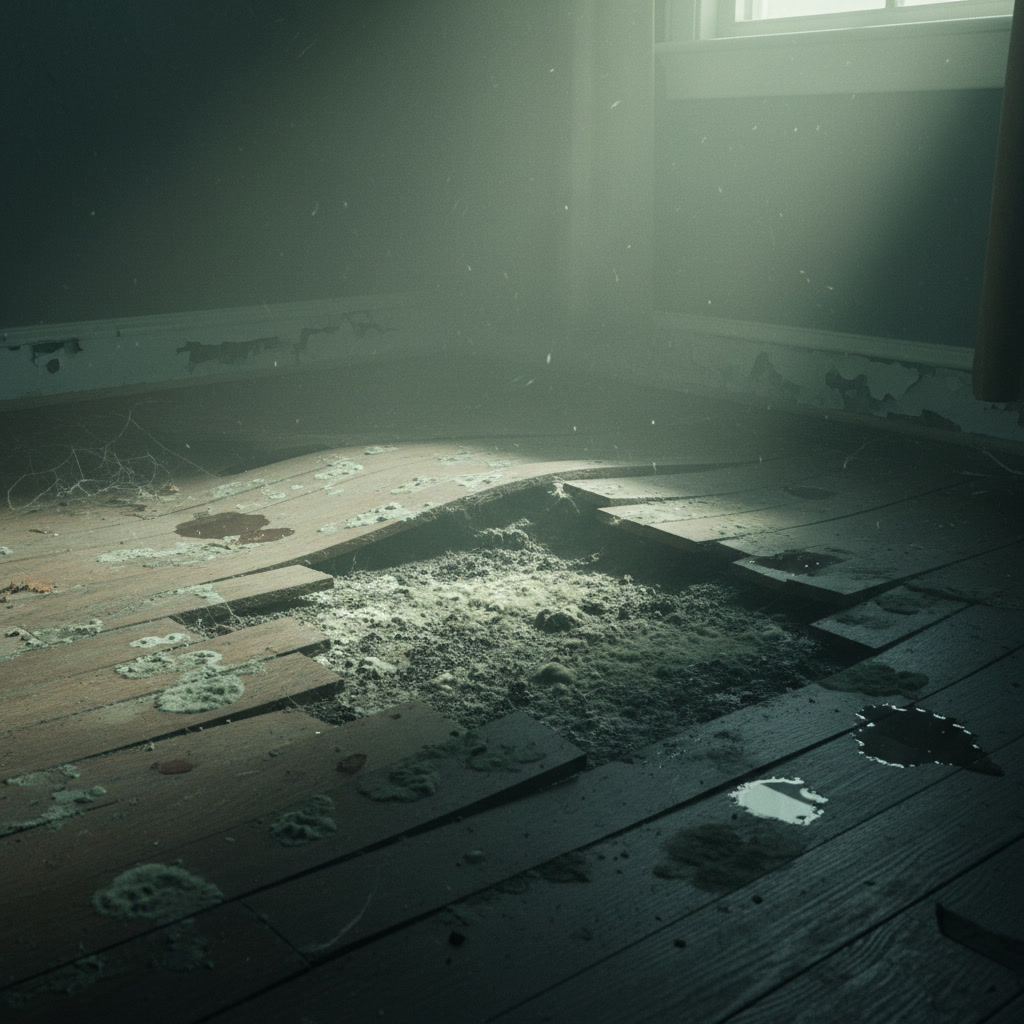
Baseboards separate from walls when flooring beneath them swells, contracts, or shifts vertically. If you notice gaps between baseboards and walls, nail pops in trim, or sections that feel loose when pressed, the floor elevation has changed. Healthy, stable floors maintain consistent height relationships with surrounding trim.
Water damage often travels from floors into adjacent walls through capillary action. Baseboards act as early warning systems, showing paint bubbling, wood rot, or separation before wall damage becomes obvious. When trim near floor level deteriorates faster than upper wall sections, moisture is rising from the flooring system.
Many homeowners focus repairs on visible baseboard damage without addressing the underlying floor problem. Replacing trim without fixing the floor simply means you’ll replace the trim again within months when moisture returns.
The Age Factor and Material Lifespan
Every flooring material has a predictable service life under normal conditions. Carpet lasts 10 to 15 years before padding degrades and fibers mat permanently. Vinyl flooring survives 10 to 20 years before plasticizers break down and seams fail. Laminate handles 15 to 25 years if moisture stays controlled. Even solid hardwood, which tolerates multiple refinishing cycles, eventually thins to less than three-eighths inch and cannot be sanded again.
Original flooring in homes 20 years or older has reached or exceeded its engineered lifespan regardless of visible condition. The adhesives, finishes, and substrate connections have degraded through thermal cycling, UV exposure, and moisture fluctuation. At this age, surface appearance becomes unreliable as a condition indicator.
If you’re comparing different flooring materials for your upcoming replacement project, understanding the performance differences between hardwood, laminate, and vinyl helps you choose products matched to your specific moisture conditions and usage patterns.
Professional Inspection Reveals What You Cannot See
Surface symptoms tell only part of the story. Professional flooring contractors use moisture meters that measure water content inside materials without causing damage. Readings above 12% in wood subfloors indicate active moisture problems. Thermal imaging cameras reveal temperature differentials that mark wet areas, even when surfaces appear dry.
Subfloor inspection sometimes requires removing small sections of finished flooring in multiple locations. This invasive testing provides direct visual assessment of substrate condition, fastener integrity, and mold presence. The cost of diagnostic removal (typically $200 to $400) prevents misdiagnosis and inappropriate repairs that waste thousands of dollars.
Top Notch Home Solution LLC provides comprehensive flooring assessments that examine not just the visible surface but the entire structural system supporting it. With 19 years of experience in Connecticut homes, their team recognizes regional moisture patterns, seasonal movement issues, and construction methods specific to local building practices.
Protecting Your Investment With Timely Action
Replacing flooring before subfloor damage occurs costs 40% to 60% less than waiting until structural repairs become necessary. Early replacement also preserves your options, allowing you to choose from the full range of flooring products instead of being limited to materials that accommodate uneven or damaged substrates.
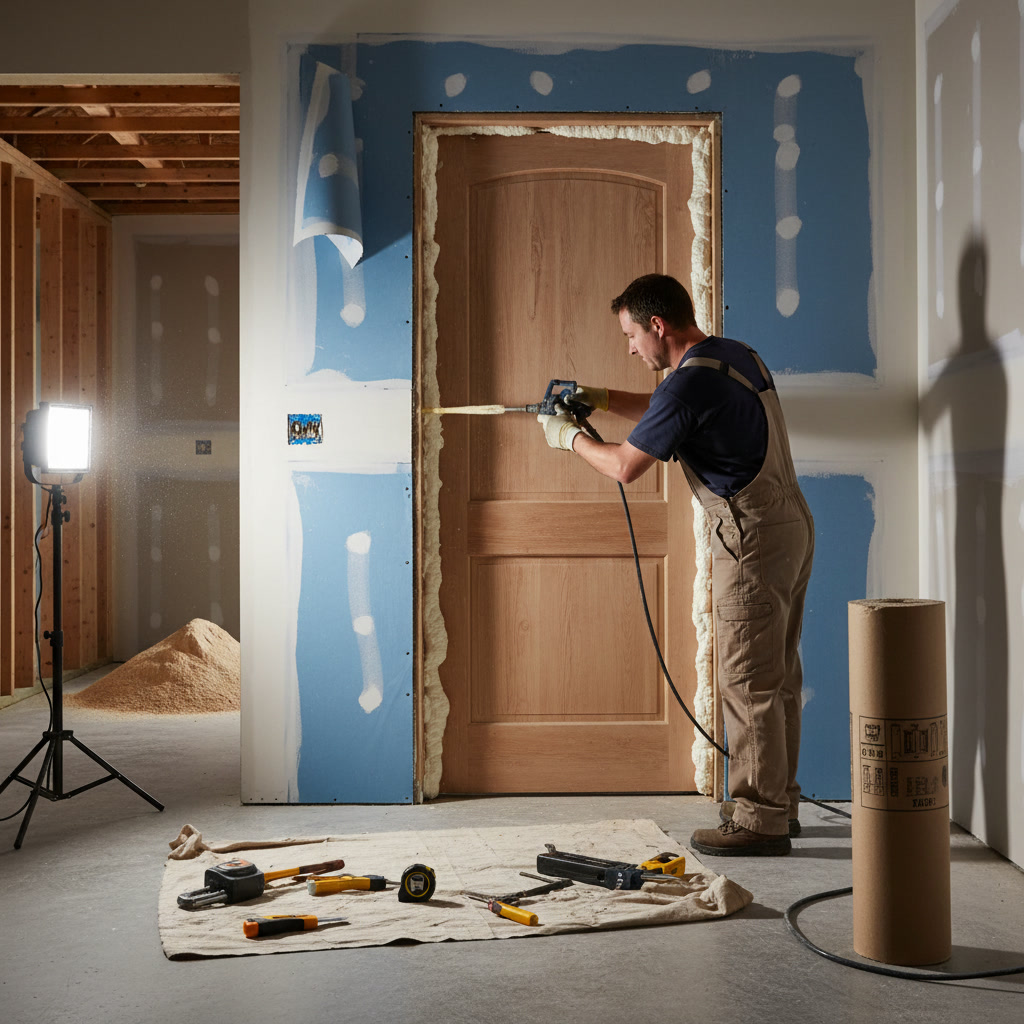
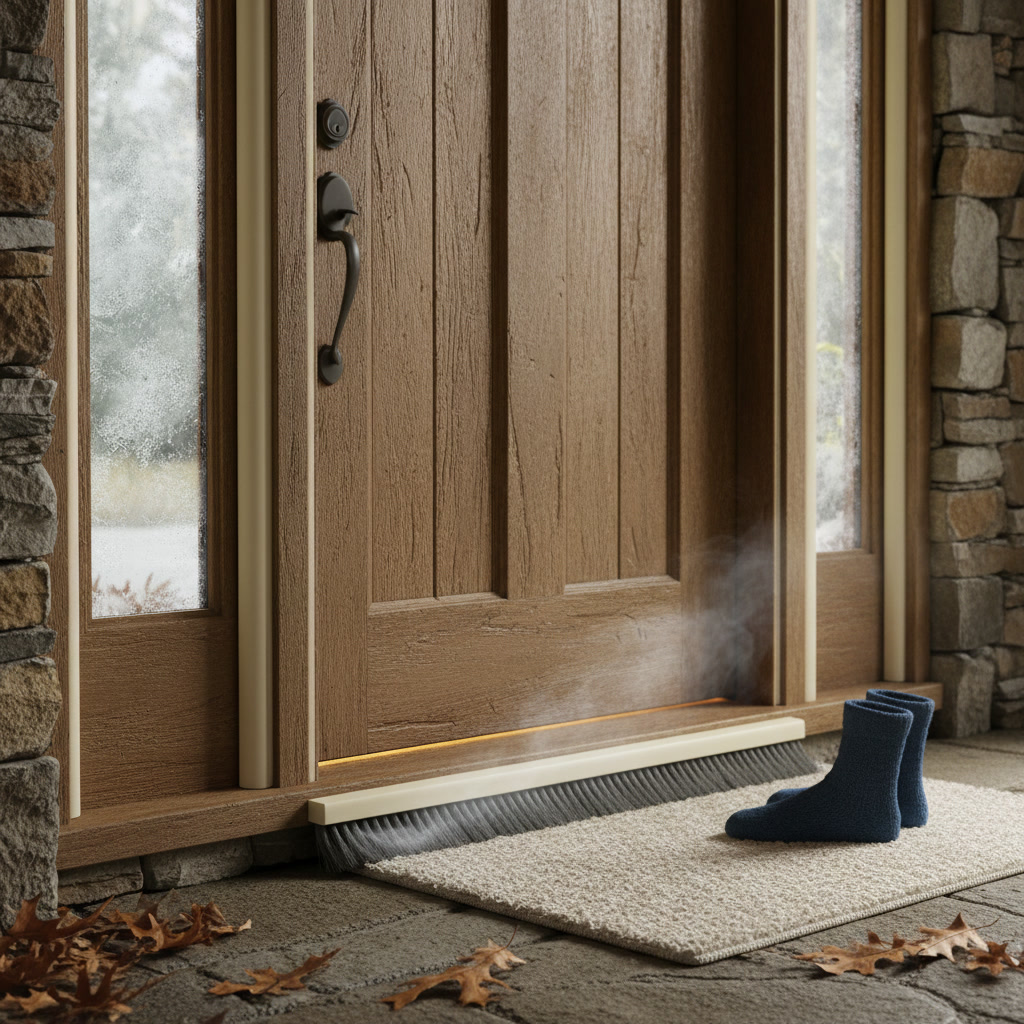
Prevention extends beyond the floor itself. Proper door insulation and window insulation reduce condensation that contributes to floor moisture. Addressing these building envelope issues alongside flooring replacement creates a comprehensive solution that protects your investment long-term.
Schedule replacement work during dry seasons when subfloors can be properly assessed and remediated if needed. Spring and fall provide ideal conditions in Connecticut, avoiding both summer humidity and winter heating season constraints. Planning ahead allows contractors to order materials, schedule work efficiently, and complete installation before weather-related complications arise.
If you’ve noticed any combination of soft spots, persistent squeaks, visible water damage, gaps, warping, musty odors, or trim separation in your floors, professional evaluation prevents small problems from becoming structural emergencies. Top Notch Home Solution LLC serves homeowners throughout central Connecticut with honest assessments, transparent pricing, and skilled installation backed by comprehensive warranties. Contact their family-owned team at +18607068116 for a free estimate and expert guidance on protecting your home’s structural integrity.